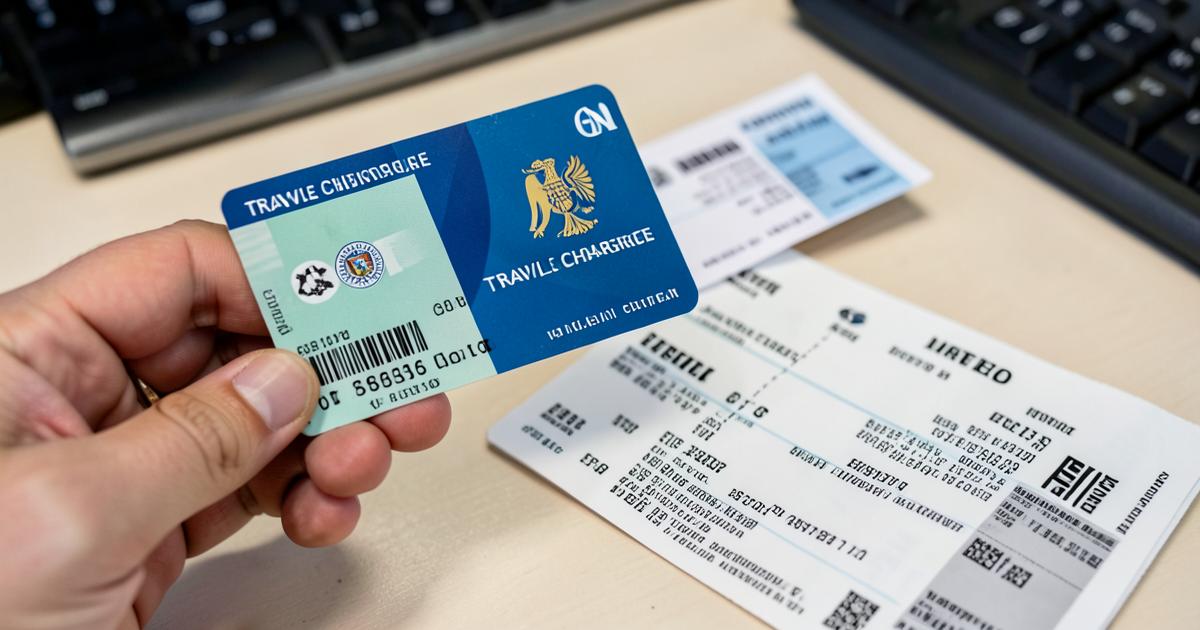
Short answer: the headline benefit of a government travel charge card is that you do not have to pay for official travel out of your own pocket and wait to be reimbursed. Everything else the card offers — no annual fee to the cardholder, simplified expense records, protection against personal credit damage, and access to negotiated government rates — follows from that same idea: the card separates official expenses from your personal finances.
This question appears on training quizzes precisely because people confuse the travel card with a consumer rewards card. It is not one. Understanding what it is for makes both the benefits and the rules obvious.
What the travel card actually is
A government travel charge card is issued to an individual traveller for use on official travel only. In the US federal system it is issued under the GSA SmartPay programme. It comes in two broad flavours: an individually billed account, where the cardholder receives the statement and is responsible for paying it, and a centrally billed account, where the agency is billed directly and usually only certain expenses such as airfare are charged. Many travellers hold the first type and book flights against the second without realising the distinction.
Either way, the card is tied to an official travel authorisation. Charges are expected to map to a specific trip, to be within policy, and to appear on a voucher afterwards.
The benefits, in order of how much they matter
1. No out-of-pocket funding of official travel
This is the answer most quizzes are looking for. Without a card, a traveller sent on a two-week trip might have to advance several thousand dollars in flights, hotels and rental cars against their own credit limit, then wait weeks for reimbursement. For junior staff that is not an inconvenience; it is a barrier to being able to do the job at all. The card removes it.
2. No annual fee to the cardholder
The traveller pays nothing to hold the card. There is no membership charge and, when the account is paid on time, no interest, because a charge card balance is settled in full each cycle rather than revolved.
3. Clean separation of official and personal spending
Every official expense lands on one statement. That makes voucher preparation faster, audits cleaner, and disputes easier to evidence. It also protects the traveller: if a charge is questioned months later, the record exists and is not tangled up with grocery shopping.
4. Access to government rates and included protections
Presenting the card at hotels and rental counters is often what unlocks negotiated government rates and, importantly, exemption from state and local occupancy or sales taxes in jurisdictions that grant it. Rental car reservations booked under the government programme typically include collision damage coverage, which means declining the counter insurance upsell rather than paying for it twice.

5. Fraud liability and dispute support
Card networks apply zero-liability protection to unauthorised charges, and the issuer provides a formal dispute channel. A cash advance stolen from a wallet is simply gone; a fraudulent card charge is recoverable.
6. Controlled ATM access when cash is genuinely needed
Cardholders on travel status can usually draw limited cash for expenses that cannot be charged — some taxis, tips, small local vendors abroad. The limit is deliberately small and tied to the travel dates.
7. Spending controls that protect the organisation
Merchant category blocks, credit limits and activation windows mean the card is difficult to misuse by accident. That is a benefit to the traveller too — it is hard to accidentally charge something you should not have.
What is not a benefit
Quiz questions usually offer at least one tempting wrong answer. None of the following are benefits of a government travel card:
- Personal purchases or personal travel — these are prohibited, not permitted.
- Earning personal rewards, points or airline miles for the cardholder.
- Revolving credit or carrying a balance month to month.
- Avoiding the need to file a travel voucher.
- Exemption from following per-diem and lodging policy limits.
The responsibilities attached
The card is a privilege tied to conduct. Misuse — personal charges, late payment, undocumented expenses — can lead to suspension or cancellation of the card, salary offset to recover the balance, and in serious cases disciplinary action. Individually billed accounts are the cardholder’s legal obligation to pay, even while awaiting reimbursement, so filing the voucher promptly after travel is not optional housekeeping. It is how the balance gets cleared before it goes delinquent.
Practical habits that keep people out of trouble: file the voucher within the required window, keep receipts above the documentation threshold, split-disburse the reimbursement directly to the card where that option exists, and check the statement each cycle rather than assuming it is correct.
Using the card overseas
On international travel the card handles currency conversion automatically, which removes the need to carry large sums of cash and gives you an exchange rate you can evidence on the voucher. Two things are worth doing before you fly: confirm your travel dates are recorded so the account is not flagged and frozen mid-trip, and check whether your destination is largely cash-based, because card acceptance varies enormously outside major cities.
Verify against your own policy
Programmes differ between agencies, departments and countries, and rules are updated regularly. Treat this article as an overview and confirm the specifics with your own agency travel policy, your card programme coordinator, or the official programme documentation before you rely on any single point. And before an official trip abroad, run your passport dates through the free checker on this site — the card handles the money, but it will not get you past the check-in desk.