Packing gets easier when every item has a place, but buying another organizer is not always the answer. The useful choice is the one that fits the bag and the routine you already have. These fifteen options give you different approaches to compare, not a claim that every traveller needs fifteen products.
This is a research-based buying guide, not a hands-on product test. Product names are given so you can find the current manufacturer listing yourself; the suggested uses and trade-offs are editorial judgments. We have not tested durability, measured performance or invented customer reviews. Specifications, regional availability and product names can change, so confirm the exact listing before buying.
Start with the problem you actually need to solve
Empty your travel bag and identify what is hard to find. If the problem is one loose charging cable, an entire cube set is unnecessary. If you share luggage, separate each person’s clothes first, then decide whether a cube makes that division easier. Start with one or two usable sizes rather than choosing the largest bundle.
How to compare before ordering
Measure the usable interior of your bag, including curved corners and compartments. Check the cube’s dimensions, empty weight, opening style and care instructions. A compression zipper can reduce the bulk of suitable clothing, but it does not lower your luggage weight or create room without a trade-off. Clothes may crease, and a compressed cube can become a firm block that is harder to arrange.
15 options and the trade-off to consider
1. Eagle Creek Pack-It Isolate Compression Cube
A compression design for travellers comparing lightweight clothing organizers. Consider it for soft garments that tolerate being squeezed. Check the dimensions against your bag, then compare the weight of the organizer with the clothes you are putting inside it. A tightly filled cube can become awkwardly firm, so leave room to operate the zipper without pulling hard.
2. Peak Design Packing Cube
An organizer with separation for clean and used clothing. That separation may be useful on a multi-stop trip where laundry is not available every day. Think through how the contents will move during the holiday: an initially full clean side needs space for used garments later. It is still sensible to isolate wet or very dirty clothing separately.
3. Patagonia Black Hole Cube
A structured organizer from the Black Hole range. Consider this style when you want an organizer that can serve beyond clothing, such as keeping small essentials together inside a larger bag. Compare the exact size and interior arrangement; details can differ between versions. A more substantial organizer may be useful, but it also occupies space and adds weight.
4. Osprey Daylite Packing Cube
Mesh panels and an accessible opening make contents easier to identify. Visibility is worth considering if you regularly unpack in shared accommodation or need to find a particular layer quickly. Check whether the set sizes match your bag rather than choosing only by the number of pieces. A mesh panel is useful for identification, not protection against spilled liquids.
5. Gonex Compression Packing Cubes
A dual-zipper compression option. Compare the usable dimensions before and after compression with your suitcase compartments. This style is most relevant for soft clothing, not rigid equipment. If you like organizing complete outfits, remember that an outfit with thick trousers may need a different size from one made up of light summer garments.
6. Shacke Pak Packing Cubes
A multi-piece organizing set with a recognisable reinforced top design. A set can be convenient when separating tops, underwear and accessories, but only if you need those categories. Check the included sizes and laundry-bag details on the current listing. Buying more pieces than your bag can use leaves you with extra organizers rather than a simpler packing routine.
7. Cotopaxi Cubos Del Día Travel Cube
Colourful organizers made using repurposed materials. Distinctive colours can help identify whose clothes are whose when several people share one suitcase. Confirm the selected size, and note that colour combinations vary. For practical packing, decide whether a small accessory cube or a larger clothing organizer solves the actual problem before choosing a pattern you like.
8. Calpak Packing Cubes 5-Piece Set
A coordinated set with several sizes and label holders. Labels can help when packing for several travellers or storing items out of sight. Compare each piece with the layout of your suitcase and confirm which pouch is included in the current set. Do not assume an ordinary clothing cube offers the same liquid protection as a dedicated toiletry pouch.
9. Monos Compressible Packing Cubes
A structured compression range. Consider how you prefer to unpack: a structured cube may be convenient to place on a shelf, while a very light one can collapse when empty. Confirm the set configuration and measurements, especially if your suitcase is not from the same brand. Compatible-looking luggage is not proof of a precise fit.
10. Baggu Packing Cube Set
A patterned set made from recycled ripstop nylon. This is a useful style to compare if visual separation helps your packing routine. Check current care instructions rather than assuming every organizer can be washed in the same way. If a pattern is unavailable, compare the specifications of the replacement listing, not just its colour.
11. BAGSMART Compression Packing Cubes
A clothing-focused compression set. Work backwards from your garment categories and suitcase size before choosing a bundle. Product ranges and included pieces can change, so verify the particular listing. An organizer that suits a large checked suitcase may be unnecessarily big for a narrow backpack even if both are described as travel luggage.
12. Away Insider Packing Cubes
A set designed around Away luggage. Compare it if you already use the compatible suitcase, but still measure the space left after shoes and toiletries. For other bags, check the actual dimensions instead of relying on the product photographs. A neat fit in one brand’s suitcase does not automatically mean a neat fit in yours.
13. Aer Packing Cube
A compression organizer from a travel-bag brand. This is one to compare for a compact bag where each compartment has a defined job. Check that the compressed shape remains easy to place beside other items. Forcing a full cube into an awkward gap can make access worse, even when the total volume looks acceptable on paper.
14. Thule Compression Packing Cube
A compression design with semitransparent fabric. A less exposed view of the contents may suit travellers who want to identify clothing without an open mesh panel. Check the chosen size and the manufacturer’s care guidance. As with any compression cube, use the second zipper only after closing the first comfortably; it should not be a substitute for removing excess clothing.
15. Nomatic Compression Packing Cubes
A zippered compression range with visible mesh sections. Compare the shape and sizes with the bag you already own. Manufacturer space-saving claims are not a promise for your particular clothing: thick denim, structured jackets and soft T-shirts behave differently. The relevant question is whether the packed cube fits your bag and lets you reach things without a complete unpack.
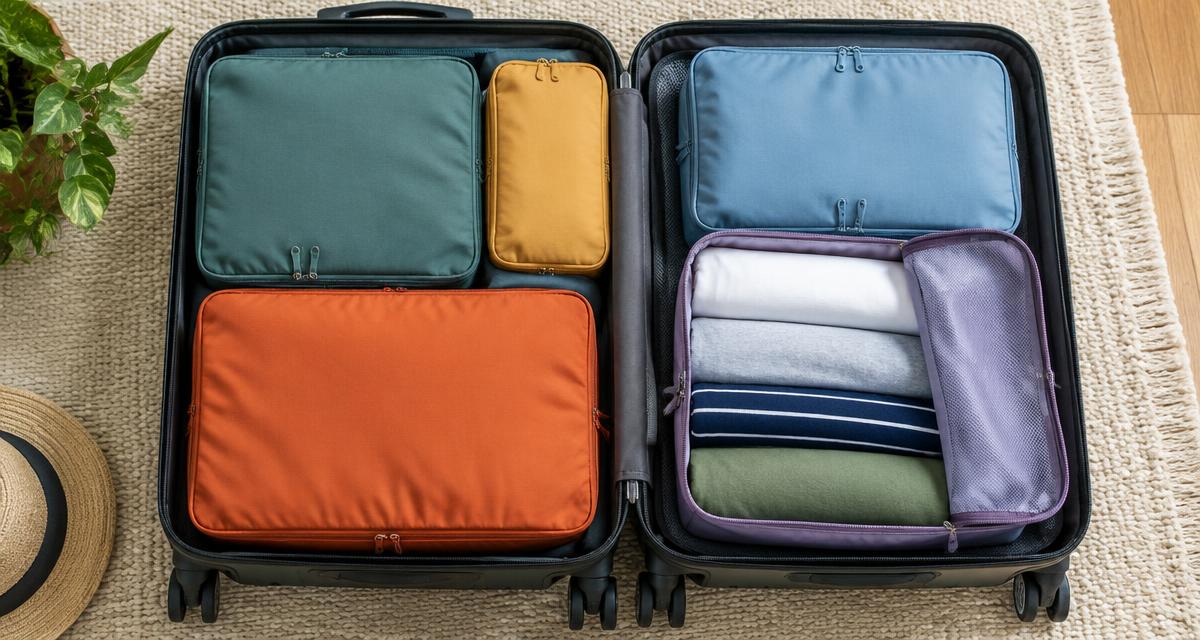
A setup for a short trip
For an illustrative four-night trip, try one cube for tops and light layers, one smaller cube for underwear and a separate bag for used clothing. Lay those beside your shoes and toiletries before adding anything else. If they consume the whole suitcase, reduce the clothing list or use fewer organizers. This example describes a packing method, not a promise about capacity.
When a simpler alternative is better
A reusable laundry bag or lightweight pouch may be enough if your clothes are already easy to find. For a backpack used every day, several rigid cubes can get in the way. Try packing with what you own first. Buy only when you can name the specific improvement: faster access, separation between people or a tidier hotel shelf.
Mistakes that make an organizer less useful
- Buying a set without measuring the suitcase.
- Treating compression as a way around airline weight limits.
- Mixing wet clothing with dry garments.
- Pulling a zipper closed on an overfilled cube.
- Assuming every fabric or mesh panel is waterproof.
- Ignoring care instructions and the return policy.
Check the bag and document rules separately
An organizer does not change the airline’s baggage allowance or airport restrictions. Check the carrier’s current size and weight rules and the relevant airport guidance. Keep items that may need inspection accessible rather than burying them beneath tightly packed clothing.
TSA: check items permitted through US airport screening
Plan the trip around your actual travel days
Prepare documents for a family journey
Questions before you buy
Do packing cubes save space?
Ordinary cubes mainly organize. Compression designs may reduce the bulk of suitable clothes, but the result depends on the contents and does not reduce weight.
How many cubes do I need?
Start with the categories you actually use and the space in your bag. Two well-sized organizers can be more practical than a large set.
Can I put wet clothes in a cube?
Do not assume a clothing cube is a leakproof wet bag. Use appropriate separate protection, then dry or wash the garments as soon as practical.
Are expensive cubes always better?
Price alone does not establish suitability or durability. Compare fit, construction, care instructions and returns; this guide does not contain hands-on performance tests.
The best purchase is the one you can explain in one sentence: it solves a real problem with the luggage or documents you already carry. Compare the current manufacturer details, check fit and returns, and skip the extra pieces that do not serve your trip. Product availability and specifications may change.