The unfamiliar part of an EES border crossing may be the pause: a passport scan, a camera and, for many first registrations, fingerprints. The Entry/Exit System is the European Union's digital record of short-stay arrivals and departures by covered non-EU travellers. Its phased rollout began on 12 October 2025 and was scheduled to reach full implementation by April 2026. The experience can still differ by crossing, so check the official EU page close to travel rather than relying on an older airport report.
Who does the EES apply to?
The EES applies to non-EU nationals travelling for a short stay — generally up to 90 days in any 180-day period — in the countries that use the system. That includes travellers who need a Schengen visa and those who are visa-exempt, such as many visitors from the United States, the United Kingdom, Canada and Australia. EU citizens, and people who hold certain residence permits or long-stay visas, are generally not registered. The official EU website lists the exact exemptions and the countries that operate the system.
What happens at the border
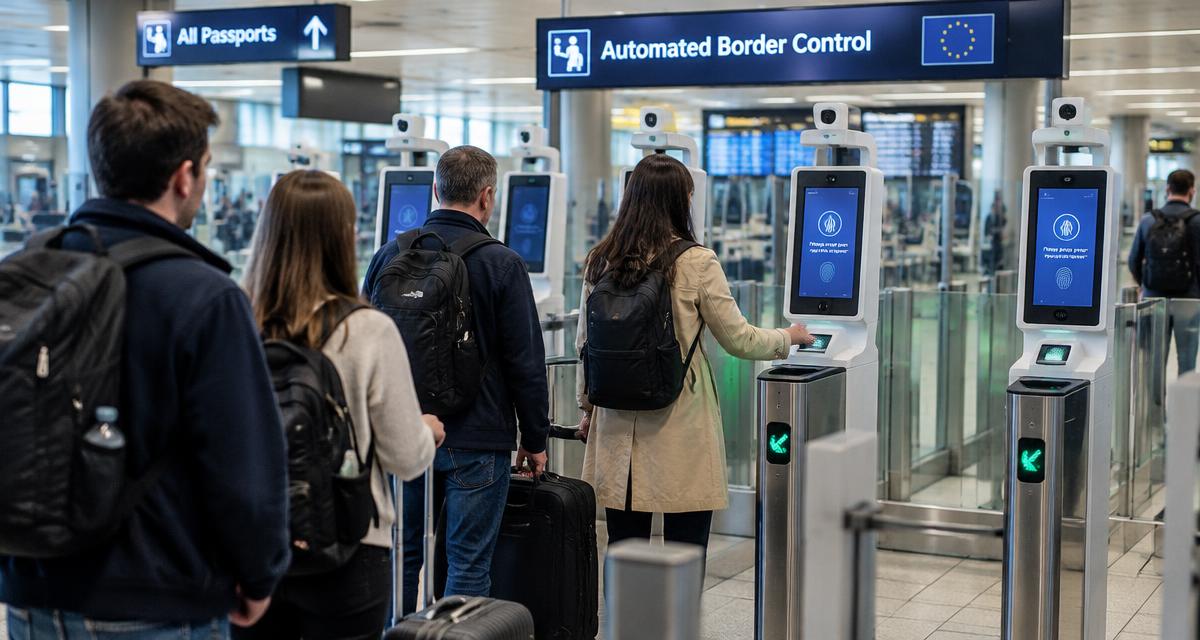
The first time you cross an external border after the system reaches that crossing, your passport is scanned and you give fingerprints and a facial image, either at a self-service kiosk or with a border officer. Children under 12 are exempt from fingerprinting. On later trips, the system can recognise you, which is intended to make repeat crossings quicker. Your entry and exit dates are recorded automatically, and your passport should no longer be stamped once the system is fully in place.
Why it matters for the 90/180-day rule
Because entries and exits are recorded digitally, overstays are much easier to detect. The 90/180-day rule is a rolling calculation: on any day of your stay, the total days spent in the Schengen area during the previous 180 days must not exceed 90. Travellers who make several trips a year should keep their own record and use the official short-stay calculator on the European Commission's website. Our stay calculator can help you plan, but the official calculation is the one that counts.
Does the EES change passport validity rules?
No. The Schengen passport rules remain: your passport generally must be valid for at least three months after the date you plan to leave, and it must have been issued within the last ten years. Check your dates with our passport validity checker and read the passport validity guide for worked examples.
EES and ETIAS are different
The EES is a border registration system; you do not apply for it in advance and there is no fee. ETIAS is a separate, planned travel authorisation that visa-exempt travellers will need to obtain online before travelling once it starts. The EU has announced that ETIAS will follow the EES; check the official site for its confirmed start date and ignore unofficial websites that charge to "apply" for EES. Our Europe visa guide explains Schengen visas and ETIAS in more detail.
Practical tips
- Allow extra time at the border on your first crossing after the system went live.
- Make sure your passport's chip and data page are undamaged and readable.
- Keep your own list of Schengen entry and exit dates if you travel often.
- If you travel with a new passport, you may need to register again.
- Remember that Ireland and Cyprus do not use the EES.
Plan for a mixed rollout
Two travellers can use different airports and report different experiences without either being wrong. One crossing may direct passengers to kiosks while another still relies more on officers during the gradual introduction. Follow signs, keep children and their documents together, and allow more connection time than you would for a familiar domestic transfer. The system records travel; it does not extend a permitted stay or repair an invalid passport.
Official sources
- European Union — Entry/Exit System (EES)
- European Union — ETIAS
- European Commission — Short-stay calculator
EES and ETIAS arrangements are set by the EU and can change as rollout continues. Use the official EU travel pages for the latest crossing and start-date information.
What the system means for frequent visitors
If you visit the Schengen area several times a year, the EES changes how your allowance is tracked. Instead of relying on stamps that can be faint, missing or misread, the system calculates your 90-days-in-180 allowance automatically each time you cross the border. That is good news if stamps ever caused confusion, but it also means overstays are detected precisely rather than by chance. If you travel often, keep your own running count of days as well, so a surprise at the border never happens.
Your passport still matters just as much. The EES records your crossings, but border officers still check that your passport meets the Schengen validity rules — issued within the last ten years and valid for at least three months beyond the day you plan to leave. Our passport validity guide walks through that calculation with worked examples.
Practical tips for your first trip under the new system
On your first crossing after the system applies to you, allow extra time at the border because registration takes longer than a normal stamp. Have your passport open at the photo page, follow the officer's or kiosk's instructions for the fingerprint and photograph steps, and keep your travel group together so families are processed smoothly. Later crossings should be quicker because your record already exists.
If you hold a residence permit or long-stay visa for a Schengen country, the EES generally does not apply to you in the same way — but confirm your category on the official EU pages before assuming you are exempt, because the rules distinguish carefully between short-stay visitors and residents.
What the EES is not
Two things are worth separating from the EES itself. It is not a visa, and it does not change how long you may stay — the 90-days-in-180 rule for visa-exempt visitors is the same rule as before, simply measured more accurately. And it is not ETIAS, the separate travel authorisation that visa-exempt visitors will need to apply for online before travelling. EES records your crossings at the border; ETIAS is something you arrange in advance. Check the official EU pages for the current status of both before you book, because launch dates and scope have moved more than once.