Most people buy travel insurance the way they buy phone chargers at an airport kiosk: fast, a bit anxious, and without reading much. That works fine until something actually goes wrong — a cancelled flight, a hospital visit abroad, a stolen bag — and you discover the policy you bought covers a fraction of what you actually needed. The fix isn't to buy the most expensive plan available. It's to work out what you're protecting against, put a number on it, and buy cover that matches.
Start with what you're actually protecting
Travel insurance bundles several separate risks into one policy: medical emergencies, trip cancellation or interruption, lost or delayed baggage, and sometimes rental car excess or gadget cover. Each of these has a completely different financial exposure. A lost suitcase might cost you a few hundred dollars to replace. A medical evacuation from a remote region can run into six figures. Before you compare quotes, it helps to size each risk separately rather than treating "travel insurance" as one lump decision.
A worked example: pricing your own exposure
Say you're planning a three-week trip with a hypothetical total prepaid cost of $4,200 (flights, a tour deposit, and a hotel package), and you're heading somewhere with high out-of-pocket medical costs if you're uninsured locally. Here's one way to think through the numbers:
- Cancellation cover: at minimum, the $4,200 you've already paid and can't get back if you can't travel.
- Medical cover: a hypothetical buffer of $100,000+ for emergency treatment and evacuation, since this is the risk with no natural ceiling.
- Baggage cover: a rough estimate of what's in your suitcase — say $1,500 of clothing and gear, not the replacement cost of everything you own.
- Excess/deductible: if a policy has a $250 excess per claim, budget for that as money you're still on the hook for.
Add those up and you get a target cover profile, not a single number — which is exactly what quotes ask you for. Our travel insurance calculator walks through this same logic so you can plug in your own trip cost, destination and length of stay and see a sensible cover range before you start comparing policies.
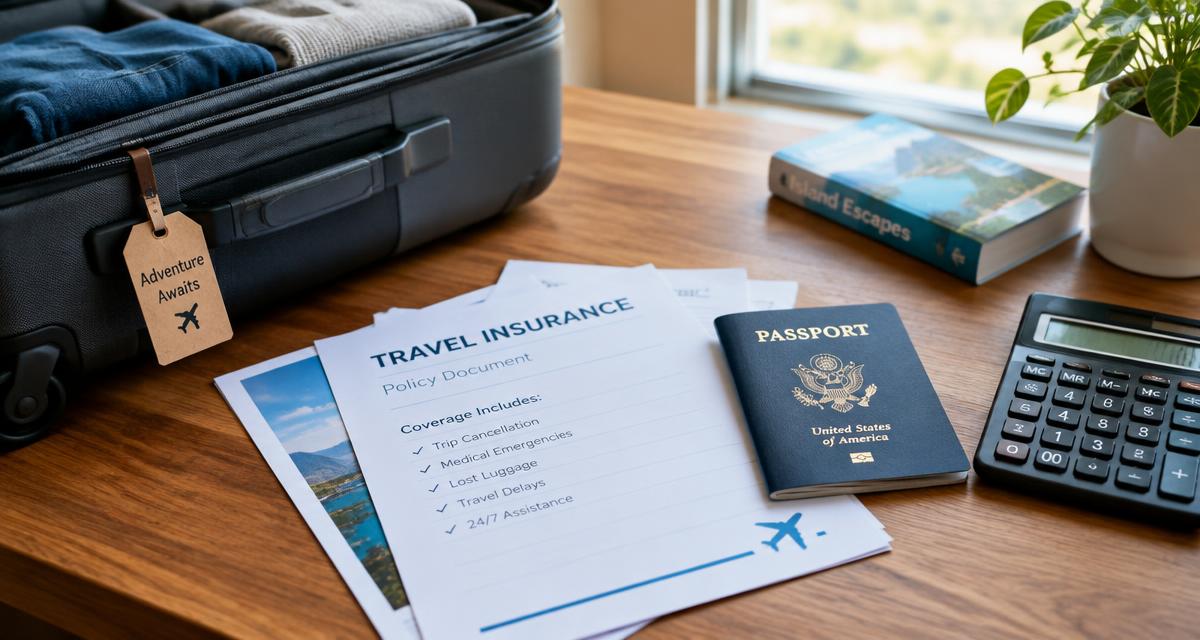
Medical cover: the one to not skimp on
Trip cancellation has a ceiling — it's capped by what you actually paid for the trip. Medical costs abroad do not have that ceiling. A single week in intensive care or an emergency flight home on a medical stretcher can cost more than most people's annual salary. If you're trimming a budget, trim baggage or gadget add-ons before you trim medical cover, and check whether your destination has a reciprocal health agreement with your home country — it changes how much you're exposed to, but it rarely covers everything a full policy would.
Cancellation and interruption: read the trigger list
Cancellation cover doesn't pay out for any reason you decide not to travel — it pays out for the specific triggers the policy lists, things like illness, a family bereavement, or your airline going out of business. If you want to cancel for a reason not on that list, you generally need a "cancel for any reason" upgrade, which costs more and usually only reimburses a percentage of your loss, not the full amount. Read the trigger list before you assume you're covered.
Pre-existing conditions and activity exclusions
Two of the most common reasons claims get rejected are undeclared pre-existing medical conditions and activities the policy excludes by default, like skiing off-piste, scuba diving below a certain depth, or motorbike riding. If either applies to your trip, look for a policy that lets you declare the condition or add the activity explicitly, rather than assuming a standard policy has you covered.
Comparing quotes fairly
Once you have your target cover profile, compare quotes against it line by line rather than by headline price. A cheap policy with a $100,000 medical ceiling and a $500 excess might actually cost you more in a real claim than a slightly pricier policy with a $5,000,000 medical ceiling and no excess on major claims. Check the excess, the per-item baggage limit, and whether cancellation cover matches your actual prepaid trip cost — not a generic average.
Annual multi-trip policies versus single-trip
If you travel more than two or three times a year, an annual multi-trip policy is often cheaper overall than buying single-trip cover each time, though it usually caps the length of any one trip (commonly somewhere between 30 and 90 days, depending on the insurer). Run the numbers for your own travel pattern — our travel cost calculator can help you estimate your total annual travel spend, which puts the cost of either option into perspective.
A quick checklist before you buy
- Total your prepaid, non-refundable trip costs for cancellation cover.
- Check the medical and evacuation cover ceiling, not just the headline price.
- List any activities you plan to do that might need separate cover.
- Declare pre-existing conditions honestly, even if it costs a bit more.
- Compare the excess on each policy, not just the premium.
Family and group policies
If you're travelling as a family or a group, check whether a family policy is cheaper than buying individual policies for each person. Many insurers offer a flat family rate that covers two adults and their dependent children, which can be noticeably cheaper than separate adult policies once you have more than two travellers. The medical and cancellation limits on a family policy usually apply per person, not as a shared pool, so check the fine print rather than assuming the limits are divided between everyone on the trip.
Also check age limits carefully. Some policies reduce cover or charge significantly more once a traveller passes a certain age threshold, commonly somewhere in the 65 to 70 range. If you're travelling with older relatives, get a quote for each person individually as well as a family quote, since the family rate sometimes excludes travellers above a certain age entirely.
Single-trip versus multi-destination cover
If your itinerary spans several countries, check that the policy you choose actually covers every destination on your route, including any brief stopovers. Some insurers price regions differently, and a policy bought for "Europe" might not automatically extend to a few days added on in a country outside that region. Read the destination list in the policy wording before you assume a whole multi-country trip is covered under one quote, and get a revised quote if your itinerary changes after you've already bought cover.
Claiming: what to keep along the way
A policy is only as good as the claim you can support. Keep digital copies of receipts for anything you might claim, photograph damaged luggage before you report it, and get a police report or airline delay confirmation in writing whenever something goes wrong, even if it seems minor at the time. Insurers routinely reject claims not because the loss wasn't covered, but because the paperwork supporting it is missing or incomplete. A folder on your phone with photos and receipts, updated as you go, makes the claims process far less stressful if you ever need it.
Frequently asked questions
Does credit card travel insurance replace a standalone policy?
Sometimes it covers the basics for short trips, but the medical and cancellation limits are often lower than a dedicated policy, and there are usually conditions attached, like paying for the trip entirely on that card. Check the card's policy document rather than assuming it matches a standalone plan.
Is travel insurance worth it for a domestic trip?
It depends on how much you've prepaid and whether your existing health cover travels with you domestically. If a cancellation would cost you very little and your health insurance works nationwide, the case for buying extra cover is weaker than for an international trip.
How much does travel insurance typically cost?
It varies by age, destination, trip length and cover level, and the figures change often, so check current quotes from a few insurers rather than relying on an old number you saw online.
What's the most common reason claims get rejected?
Undeclared pre-existing conditions and excluded activities are consistently near the top of insurer rejection lists, followed by missing documentation like police reports for theft claims. Keep receipts and reports for anything you might claim.
For general background on what travel insurance typically covers, the UK government's guidance on foreign travel insurance is a useful starting point, and it's worth reading alongside your own destination's health and safety advisories. For the complete list of calculators on this site, visit our calculators page, and see our related guide on passport timeline guide.
All figures above are hypothetical examples to illustrate the method. Your own numbers will depend on your trip, destination and insurer — treat any calculator output as an estimate to guide your shopping, not a quote.