A hotel hair dryer can turn a quick morning routine into twenty minutes of wishful thinking. That makes a premium dryer tempting, especially if you travel often or need predictable styling before work. But an expensive, compact-looking dryer is not automatically a good travel dryer. This Dyson travel hair dryer review is a research-based assessment, not a hands-on test. It weighs the practical trade-offs of taking a premium Dyson dryer away from home: packing space, handling, drying performance, cost, and, most importantly, whether it can run safely at your destination.
First, identify the exact Dyson model
Treat “Dyson travel hair dryer” as a shopping description, not proof that a particular product is a dedicated, worldwide-compatible travel model. Dyson sells different hair-care products, and a smaller-looking body does not establish its voltage range or suitability for your trip. This article does not assume there is one universal “compact version” with a single specification. Start with the exact model name and the market in which it is sold.
Dyson's product listings and user manuals are the sources to consult for dimensions, weight, electrical requirements, included attachments, and warranty terms. Specifications, packages, and prices change, so check the manufacturer's current listing before buying. Also distinguish a dryer from a multi-styler: a device that dries while styling may serve a different routine from a straightforward blow-dry. The useful question is whether that specific appliance fits your hair, luggage, and itinerary.
What the premium option can offer
The appeal of premium dryers is usually control rather than simply more heat. Travelers considering Dyson commonly prioritize directed airflow, a choice of settings, and styling attachments suited to their routine. Those characteristics can matter if a weak hotel dryer leaves your hair damp, or if you need a diffuser or smoothing attachment that accommodation rarely provides. Assess the features actually supplied with your chosen model rather than assuming every Dyson package includes them.
Predictability is another legitimate benefit. Bringing a familiar type of appliance removes one unknown from early meetings, weddings, and short stays. Still, a premium badge cannot promise a particular drying time or finish for every hair type. Hair density, starting moisture, technique, and attachment choice all affect the result. Treat claims about faster mornings as a possibility to evaluate, not a guaranteed number of minutes saved on every trip.
Compact design does not settle the weight question
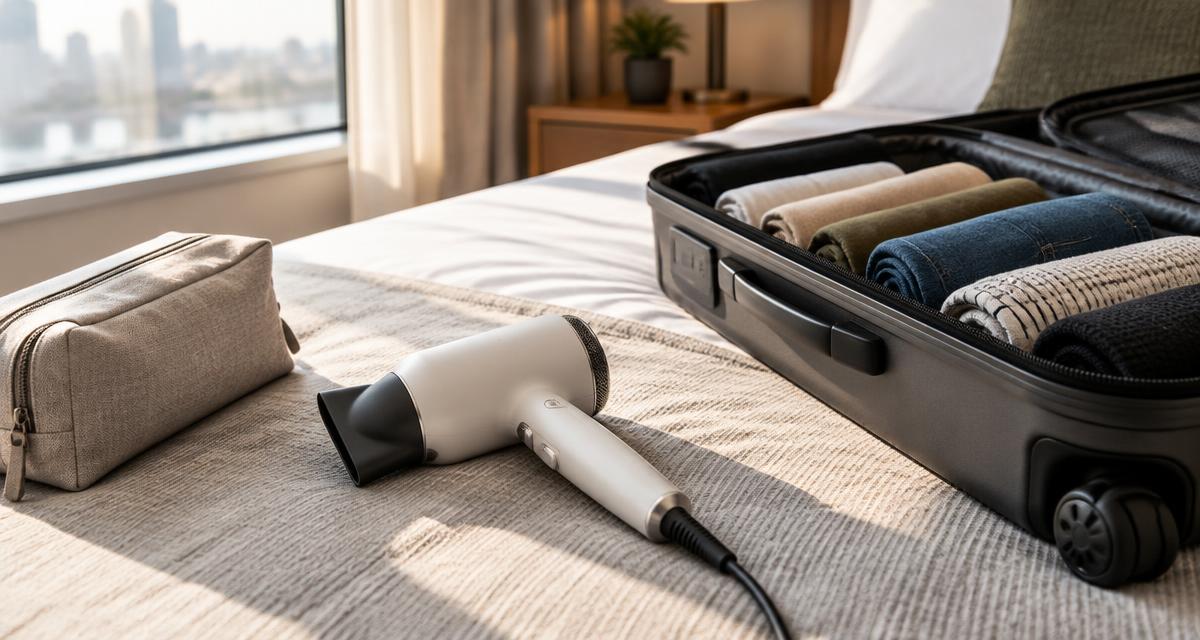
A short barrel or unusual motor layout may make a dryer look compact beside a conventional salon model. That does not necessarily make it lighter than a basic folding travel dryer. Handling balance and luggage weight are different questions: an appliance can feel comfortable in your hand yet still consume a noticeable share of your cabin allowance. Read weight figures carefully, including whether they account for the cord.
Assess the entire kit: dryer, plug, cable, essential attachments, and protective pouch or case. A bulky case can erase the space saved by a smaller body, while a nonfolding handle may fit awkwardly around shoes. Our packing cubes guide can help organize the rest of your bag, but organization cannot reduce an appliance's actual weight. If traveling carry-on only, compare packed dimensions with the space you can genuinely spare.
Voltage matters more than the plug shape
This is the decisive international-travel check. Many Dyson hair dryers are designed for the electrical supply of the market where they are purchased rather than universal dual-voltage use. Never assume that a premium price means worldwide compatibility. Read the electrical rating on your particular appliance and follow its manual's destination-use guidance. If anything is unclear, ask Dyson about that exact model and destination before packing it.
A plug adapter changes the physical connection; it does not convert voltage. A dryer intended for roughly 120-volt service is not made suitable for roughly 230-volt service merely by fitting an adapter. Incorrect voltage can damage equipment and create a safety risk. Matching voltage also does not remove the need to check manufacturer guidance, local requirements, and the suitability of any permitted adapter.
Do not plan around a generic voltage converter as an easy workaround. Hair dryers are high-power appliances, and converter suitability and manufacturer restrictions matter. A bathroom shaver socket is not a substitute for a suitable dryer outlet, either. If compatibility is not clearly confirmed, leave the appliance home. A hotel dryer or a locally compatible alternative is a better solution than an expensive electrical experiment.
When a cheaper dryer or the hotel wins
A basic travel dryer makes sense when you need occasional drying rather than precise styling. Look for an explicitly stated voltage range that matches your destinations, manageable packed size, and the settings you actually use. Some dual-voltage models require a manual switch; follow their instructions before connecting power. Lower cost does not establish compatibility any more than a luxury label does, so apply the same checks.
The hotel dryer wins on luggage weight, packing effort, and replacement anxiety. Ask your accommodation whether one is available in the room or at reception, particularly for apartments and smaller guesthouses. It may be entirely adequate for short hair, occasional use, or a trip where styling is not a priority. If you need a particular attachment or have dense hair, ask more specific questions rather than relying on “hair dryer provided.”
Price also deserves context. Compare the current purchase cost with how often you will use the appliance at home and on electrically compatible trips. Our trip cost guide helps place optional equipment alongside accommodation and transport. A premium dryer is harder to justify if buying it means cutting something you value more, especially when your accommodation already supplies a workable option.
Who the premium choice genuinely suits
A premium Dyson is most persuasive for someone who will also use it regularly at home, values its particular controls or attachments, and travels mostly where the appliance is approved for use. Frequent event or business travelers may reasonably prioritize a consistent routine over saving a little luggage space. That is a practical preference, not proof that everyone needs the same equipment.
It is less compelling for a budget backpacker, an infrequent dryer user, or someone moving between incompatible electrical regions. Before spending, make a short list:
- Confirm the exact model's destination compatibility with Dyson.
- Compare the complete packed kit with a basic travel alternative.
- Identify which settings or attachments your routine genuinely needs.
- Check current pricing, return conditions, and warranty coverage.
Make the call before packing
Buy for a repeatable need, not the promise that compact automatically means travel-ready. If the exact Dyson suits your routine, fits your bag, and is approved for your destination's supply, the premium may be worthwhile. Otherwise, choose a compatible basic dryer or confirm the hotel's provision. Add that decision to your trip planning checklist before departure, when there is still time to choose the simpler option.