Travel Visa Basics: How to Know If You Need One Before You Book

Updated October 24, 2026 · 9 min read · Checked against official sources · Editorial policy

Open passport covered in visa stamps beside a pen and checklist

Finding a good flight is exciting. Discovering afterwards that you need an embassy appointment is less fun. Before paying for a trip, spend a little time checking whether your passport, route and plans meet the destination’s entry rules. It can save you a difficult conversation at check-in and a holiday you cannot take.

You do not need to become an immigration expert. You need to identify the right rules, read the official instructions and leave enough time to follow them. Always confirm your requirements with the destination’s official immigration authority before booking, particularly before committing to non-refundable travel.

1. What a visa actually does

A visa is an authorisation issued by a country that lets you travel to its border and request entry for a particular purpose. It might be a sticker in your passport or an electronic record. Its conditions usually define what you may do, when you may arrive and how long you may stay.

A visa does not guarantee admission. Border officers can still check your documents, ask about your plans and refuse entry under local law. You may need evidence of accommodation, sufficient funds or onward travel even when a visa has already been issued.

Also separate the visa’s validity from your permitted stay. A document valid for several months does not necessarily allow you to remain for that entire period. Check the entry window, number of entries and maximum stay separately.

2. The four arrangements you will usually encounter

  • Visa-free entry: Eligible travellers can visit without obtaining a visa, subject to limits on purpose and length of stay. Other requirements, including advance authorisation or arrival forms, may still apply.
  • Visa on arrival: Eligible travellers obtain a visa at an approved entry point. Check accepted airports or crossings, fees, payment methods, photographs and supporting documents before assuming you can simply turn up.
  • eVisa or ETA: An eVisa is an electronically issued visa. An electronic travel authorisation, often called an ETA, is generally a separate permission for eligible travellers and is not necessarily a visa. Both can require approval before departure.
  • Embassy or consular visa: You apply through an embassy, consulate or authorised application centre. The process may involve an appointment, biometrics, original documents and leaving your passport for processing.

These are broad categories, not interchangeable options. You cannot choose a visa on arrival because it sounds easier if your nationality is not eligible. Follow the route the immigration authority specifies for your circumstances.

3. Your passport and purpose determine the answer

Start with the nationality of the passport you will actually use, rather than where you live or where your flight begins. Residence permits and existing visas sometimes affect eligibility, but only where an official rule explicitly recognises them. Ordinary, emergency and other passport types may receive different treatment.

Next, describe your visit honestly. Tourism, business meetings, paid work, study and volunteering can fall under different rules. A visitor exemption does not automatically permit remote work or a short paid assignment. If the official categories do not clearly cover your plans, ask the relevant authority before booking.

Check each traveller individually, including children and companions with different passports. For a European trip, our guide to getting a visa for Europe helps explain why the countries and travel area on your itinerary matter.
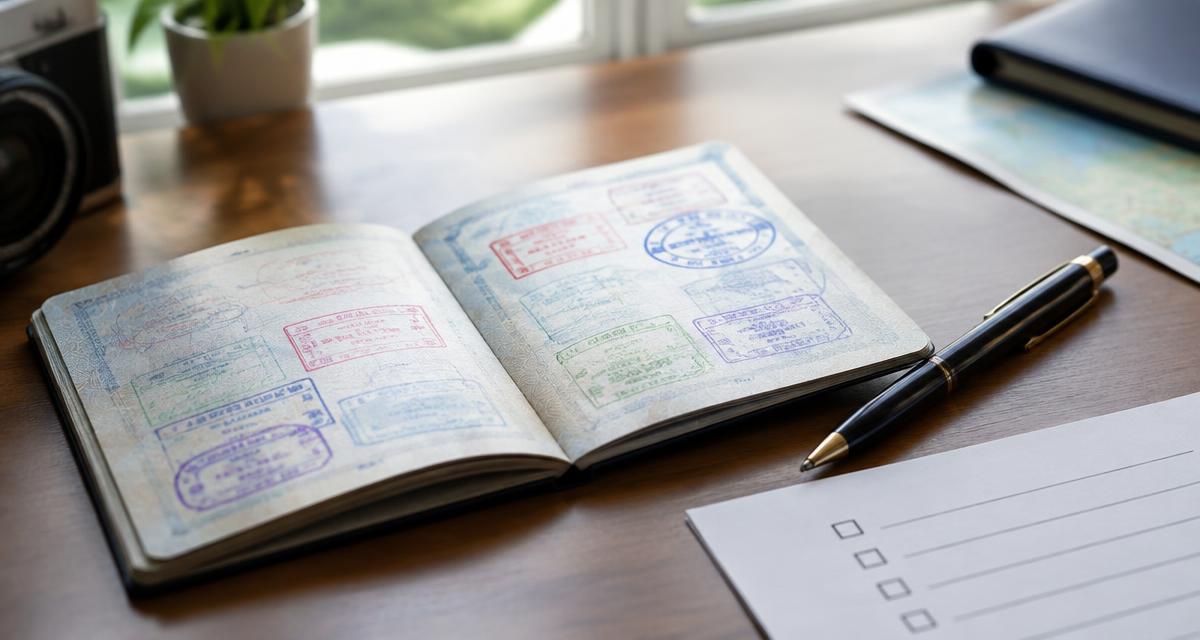
Open passport covered in visa stamps beside a pen and checklist
Check your passport, travel purpose and planned route before committing to bookings.

4. Check official sources in a sensible order

You can use the homepage visa checker to organise an initial check, but treat any checker as a starting point. Confirm the result directly with the destination country’s immigration authority or its embassy or consulate responsible for your place of residence. Your own government’s travel advice service is a useful cross-check, not a substitute for the destination’s rules.

  1. Enter your passport nationality, passport type, destination, dates and purpose of travel.
  2. Read the eligibility conditions, exemptions and permitted-stay rules, not just a headline saying “visa-free.”
  3. Check passport validity, blank pages, fees, supporting documents and any separate arrival registration.
  4. Save the official instructions and the date you checked them, then review them again before departure.

Sponsored search results and official-looking application sites may belong to commercial intermediaries. Start from the recognised government authority and follow its application instructions. If two official pages disagree, contact the responsible authority rather than choosing the more convenient answer.

5. Treat every connection as a separate document check

“I am only changing planes” does not settle the visa question. Some countries require an airport transit visa for certain passport holders even when they remain airside. Others have exemptions with precise conditions involving residence permits, visas or onward destinations.

Collecting baggage, changing airports, using separate tickets or taking an overnight connection can require you to cross immigration. That may trigger entry requirements rather than only transit rules. Check whether your terminals connect airside and whether the transit area remains open overnight; do not assume either.

Read our guide to whether you need a transit visa before choosing a connection. Confirm the legal requirements with the transit country’s immigration authority and ask the airline about baggage transfer and boarding-document checks for your exact itinerary.

6. Work backwards from departure, not a hoped-for approval

Check requirements as soon as you begin serious planning. Embassy appointments can be scarce, and collecting documents may take longer than filling in the form. Look for both the earliest permitted application date and the authority’s recommended application timing.

There is no safe universal processing deadline. An electronic application may need manual review, while a consular application may require additional checks. Published processing times are estimates, not promises. Allow room for appointments, document corrections, passport delivery, weekends and public holidays.

Follow the authority’s instructions about travel reservations. If an itinerary or booking is required, check whether a reservation or refundable option is acceptable. Avoid assuming a purchased ticket will speed approval, and do not make non-refundable commitments merely because an application has been submitted.

7. Catch the mistakes that cause trouble at departure

Before submitting, compare every name, passport number and date against the passport itself. Check whether an approval is linked to that specific passport; renewing it may mean applying again. Keep an accessible copy of approvals and supporting documents, including offline copies where appropriate.

Count permitted days carefully, including previous visits where a rolling limit applies. Check whether leaving and returning requires multiple-entry permission. A quick border crossing does not necessarily reset your allowance.

Finally, distinguish a visa from other border procedures. Registration or biometric collection is not automatically permission to enter. Our explanation of the EU Entry/Exit System covers that distinction. Before booking, confirm your position with the official immigration authority; before departure, check again for changes. Then keep your documents together and enjoy planning the parts of the trip you actually came for.

Check your own trip in 30 seconds

Enter your passport expiry date and destination to see your last safe entry date, visa status, documents checklist and readiness score.

Run the free checker

Keep reading

Do You Need a Passport to Go to the Bahamas?

Whether you need a passport for the Bahamas depends on how you travel, your citizenship and how long you stay. Here is what to carry by air, by sea and by cruise.

Do You Need a Passport to Go to Mexico?

Flying to Mexico, driving across the border, or arriving by ship? The document rules differ. Here is what US, Canadian and other travellers should carry.

Do You Need a Passport to Go on a Cruise?

Closed-loop cruises, one-way sailings and repositioning voyages have different document rules. Here is when a passport is required and when it is only strongly advised.

How to Get a Visa for Europe

Schengen short-stay visas, national long-stay visas and the new ETIAS travel authorisation explained, with the documents, timings and costs to plan for.

Passport Expiring Soon Before a Trip? What to Check First

A practical decision guide for a passport near expiry: check the destination's validity rule, connections, airline requirements and renewal options before you travel.

Travelling Internationally With Children: Document Checklist

What to prepare when a child crosses borders: passports, parental consent, name differences and where to check the rules for your actual itinerary.

Do You Need a Transit Visa for a Connecting Flight?

A connection can come with its own entry rules. Learn how to check airside transfers, self-transfers, baggage collection and transit visa requirements.

How Long Does It Take to Get a Passport? Planning Your Timeline

Passport processing times change through the year. Learn how to build a safe timeline, when to pay for faster service and what to do if your trip is close.

Lost Your Passport Abroad? What to Do, Step by Step

A calm, practical plan for a lost or stolen passport overseas: reporting it, contacting your embassy, emergency travel documents and rebooking your trip home.

Can You Travel With a Damaged Passport?

Water damage, torn pages, a loose cover or a damaged chip can get you refused boarding. Here is how to judge normal wear against damage that needs replacing.

REAL ID vs Passport: What ID Do You Need for US Domestic Flights?

Since REAL ID enforcement began, adults need an accepted ID at US airport security. Learn when a passport works, what counts as REAL ID and what to do without one.

The EU Entry/Exit System (EES) Explained for Travellers

The EES replaces passport stamps with digital records of fingerprints and a facial image at Schengen borders. Here is who it affects and how to prepare.

Travel Insurance Calculator: How Much Travel Insurance Do You Really Need?

A practical way to work out how much medical, cancellation and baggage cover your trip needs, and how to compare quotes fairly using a simple calculator.

JR Pass Calculator: Calculate Whether a Japan Rail Pass Is Worth It

How to add up your Japan train journeys, compare them with the current JR Pass price, and decide whether the pass or single tickets make more sense.

Travel Time Calculator: How to Calculate Your Total Travel Time

Door-to-door travel time is much more than the flight. Here is how to add up every stage of a journey, including time zones, layovers and the airport.

Flight Distance Calculator: Find the Distance Between Any Two Cities

How flight distance is measured, why great-circle routes look curved on maps, and what distance tells you about flight time, fares and points.

Travel Cost Calculator: How Much Will Your Trip Really Cost?

A step-by-step method for estimating the real cost of a trip, including the small, forgotten expenses that blow most travel budgets.

Qantas Points Calculator: How to Calculate the Value of Your Travel Points

How to work out what your Qantas Points are actually worth on a specific redemption, and how to tell a good use of points from a poor one.

Exchange Rate Calculator: Calculate Currency Conversion Before You Travel

How exchange rates, margins and card fees really work, and how to calculate what your money will be worth before you leave home.

Japan Travel Guide: How to Calculate Your Budget, Distance, Time and Transportation Costs

A planning guide for Japan that shows you how to calculate your daily budget, distances between cities, journey times and transport costs.

Travel Insurance: What Does It Cover and How Much Could You Save With the Right Policy?

What travel insurance usually covers, what it often excludes, and how the right policy can protect you from the costs that hurt most when a trip goes wrong.

Best Travel Packing Cubes: 15 Packing Cubes That Make Packing Easier

Compare 15 packing cube options by packing style, suitcase fit and practical trade-offs, with a carry-on packing example and a buying checklist.

Best Travel Wallets: 15 Travel Wallets to Keep Your Essentials Organized

Find a travel wallet that fits your documents and daily routine: 15 options, passport storage tips, security trade-offs and a pre-flight checklist.

Best Places to Travel With Kids: 25 Family-Friendly Destinations

Explore 25 family holiday ideas with age suitability, manageable day plans and honest planning trade-offs, from city breaks to nature trips.

Best Places to Travel Solo: 25 Amazing Destinations for Solo Travelers

Compare 25 solo travel destinations by transport, social opportunities and planning challenges, with a first-trip checklist and practical safety habits.

Travel Itinerary Template: How to Plan the Perfect Trip Step by Step

Copy a practical travel itinerary template and plan your route, transfers, daily priorities, budget and backup options without overfilling every day.

Japan Travel: The Ultimate Japan Travel Guide for First-Time Visitors

Plan your first Japan trip with a realistic Tokyo and Kyoto route, transport choices, accommodation checks, food guidance and practical arrival advice.

Travel Insurance 101: What It Covers and Whether You Really Need It

What a standard travel insurance policy actually pays for, what it usually excludes, who can safely skip it, and how to decide for your specific trip.

Best Travel Insurance in 2026: How to Compare Plans and Avoid Costly Gaps

A step-by-step method for comparing travel insurance plans — limits, excess, exclusions and claim processes — so you can spot costly gaps before you buy.

Post Office Travel Insurance: Is It Worth It, or Should You Buy Elsewhere?

How to judge a familiar high-street insurance brand: who underwrites the policy, what to check in the wording, and when comparison shopping pays off.

The Best Travel Bags for Every Type of Trip: Carry-On, Backpack, or Duffel?

How to choose between a carry-on suitcase, travel backpack and duffel by trip type, which features actually matter, and how to judge quality before you buy.

Do You Need a Travel Pillow? The Best Neck Pillows for Flights and Road Trips

Whether a neck pillow is worth packing, the main types and who each suits, and how to test one at home before a long flight.

Dyson Travel Hair Dryer Review: Is the Compact Version Worth the Price?

A research-based look at premium compact hair dryers for travel: weight, power, voltage issues, and when a cheap dryer or the hotel dryer is smarter.

Travel Agent vs. Booking Yourself: Which Saves More Money and Stress?

What travel agents actually do today, when they genuinely save you money or hassle, when booking yourself wins, and what to ask before paying a fee.

Costco Travel Review: Are the Vacation Packages Actually a Good Deal?

How warehouse-club vacation packages work, and a step-by-step method to check whether a specific package beats booking the parts separately.

Overseas Travel Checklist: 15 Things to Sort Out Before You Leave

Fifteen practical things to sort before an international trip — documents, money, health, home and tech — each with the why and the how.

This article is general information, not legal or immigration advice. Entry and document rules change often — always confirm with the official government authority for your destination and with your airline or cruise line before you travel. Read our full disclaimer.